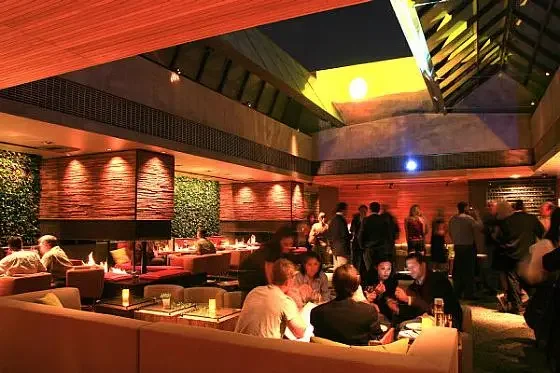
Chicago has a strange distinction most residents don't know about: some of the most cited research on why strangers should talk to each other on public transit was conducted right here, on CTA trains and buses, by a University of Chicago Booth School of Business researcher named Nicholas Epley. Nearly a million people ride the CTA on an average weekday — almost 386,000 of them on the L alone — most sitting or standing within a few feet of someone they'll never speak to.
Epley's own research says that's a missed opportunity, measured in real happiness, not just missed connections. And it has a direct bearing on a habit Chicago's professional culture leans on harder than most cities: the pitch. Walk into a River North happy hour, a Fulton Market tech mixer, or a networking breakfast in the Loop, and you'll meet plenty of people who can deliver a tight, rehearsed answer to "what do you do" before you've finished ordering a coffee. Far fewer of them ask a second question about you.
The data says that instinct is backwards — and Chicago, more than almost any other city, has the receipts to prove it.
The City Where This Research Was Actually Done
Start with the study itself, because it's almost too perfectly local to be a coincidence. Epley and behavioral scientist Juliana Schroeder ran a series of field experiments on Chicago's trains, buses, and cabs: one group of commuters was instructed to strike up a conversation with the stranger next to them, another to sit in solitude, and a third to just do whatever they normally do. Beforehand, almost everyone predicted the solitary ride would be more pleasant. They were wrong. The commuters told to talk to a stranger reported a significantly happier trip than those who kept to themselves — and in follow-up interviews, Epley found that not a single person who tried talking to a stranger reported being brushed off.
"Not a single person who said they tried to talk to someone said the other person didn't respond," Epley told a Chicago news outlet at the time. "Not one. Everybody will talk to you once you try."
That finding has since been replicated outside Chicago — a separate field study of London-area train commuters found the same pattern — but it started here, on the same L platforms and bus routes Chicago's professionals use to get to networking events every week. Which makes the local blind spot a little ironic: this is the city with the most direct evidence that the stranger next to you almost certainly wants to talk, and yet it's also home to some of the most pitch-heavy professional cultures in the Midwest.
A Downtown Full of People Trained to Pitch
Chicago's Loop workforce is enormous relative to who actually lives there — the downtown daytime population is roughly 18 times larger than the Loop's residential population, driven by a dense mix of finance, law, consulting, and increasingly tech firms. Office occupancy in the Loop has been climbing back toward pre-pandemic norms, with quarterly reports in 2025 showing occupancy rates among the highest outside of Texas, as more companies push for in-person attendance and invest in upgraded office space along Wacker Drive and the surrounding Loop core.
That's a lot of finance analysts, law associates, and consultants walking back into the same buildings, and largely the same professional culture that built the modern elevator pitch — a format built for exactly the kind of high-rise office towers that line LaSalle Street and Wacker Drive. It's a culture trained to compress your value into a single confident sentence before the elevator reaches the lobby.
Why the LaSalle Street Pitch Backfires
Research published in Psychological Science by Irene Scopelliti and colleagues found that people who self-promote consistently overestimate how impressive it makes them look, and underestimate the annoyance it produces in the listener. That's a real risk in a professional culture as pitch-trained as Chicago's financial and consulting core, where introducing yourself with your title and your firm, rather than a question about the other person, is often the reflexive move.
Compare that to the Harvard research led by Karen Huang and colleagues, which analyzed hundreds of live conversations, including a speed-dating dataset spanning thousands of exchanges, and found that people who asked more questions — especially follow-up questions — were rated significantly more likable by their conversation partner. Not because the questions were clever. Because they signaled responsiveness: real evidence that someone was listening, in a room where most attendees are visibly waiting for their turn to talk about their own deal or their own book of business.
In a city where nearly every attendee at a West Loop networking night or a Merchandise Mart tech event has a polished one-liner ready for "so what do you do," the differentiator was never a sharper answer. It's being the one person in the room who asks a real follow-up about theirs — the exact behavior Epley's own research says Chicagoans already underestimate the value of.
Chicagoans Already Like Each Other More Than They Think
Here's the part of the research that should take some pressure off the next Wicker Park networking happy hour. Yale researchers led by Erica Boothby documented what they call the liking gap — a well-replicated tendency for people to underestimate how much their conversation partner enjoyed talking to them, found consistently across strangers meeting in a lab, college roommates, and members of the public at workshops. In every case, people rated their partner as more likable than they rated themselves, meaning the anxious self-assessment happening in most first conversations is measurably wrong on both sides, most of the time.
Chicago's own public health data backs up why this matters locally. The Chicago Department of Public Health's Healthy Chicago Survey tracks adult loneliness citywide as an ongoing indicator, and the department has flagged social isolation as a growing concern across the city — particularly, local reporting has noted, on the South and West Sides, but reflected in reduced community engagement citywide since the pandemic. Layer the liking gap on top of that landscape, and the pattern is clear: a lot of Chicagoans are likely walking away from decent conversations assuming they went worse than they did, in a city where connection is already harder to come by than it used to be.
What This Means for a Networking Room in Chicago, Specifically
None of this argues against ambition — in a downtown this competitive, across finance, law, and a fast-growing tech scene, people need to convey what they do and why it matters. But the sequencing Chicago's professional culture defaults to is backwards, and the city's own research is unusually specific about the fix:
Treat the CTA rule like a networking rule, because it's literally the same rule. Epley's own data says the stranger next to you on the Brown Line is far more receptive to conversation than you'd guess — and every single person in his study who tried talking to a stranger got a response. The same logic applies to the person standing alone at the edge of a River North mixer. The instinct to assume they'd rather not be bothered is, per the research conducted in this exact city, wrong far more often than it's right.
Lead every industry conversation with a question, not your title. In a city where "what do you do" often functions as a soft credential check in half the rooms you'll walk into this month, being the person who asks it first, and means it, reads as genuinely different from another polished elevator line.
Let the follow-up question do the work your pitch was trying to do. The Harvard data is specific: it's the second and third question, not the first, that signals real listening. In an industry as saturated with rehearsed openers as Loop finance and consulting, the follow-up is the part almost nobody else in the room is doing.
Remember the liking gap on the ride home. If a conversation felt awkward in the moment, the research says you're very likely misjudging how it landed for the other person — worth remembering in a city where public health data already points to rising isolation, and every real connection carries more weight than it used to.
The Actual Takeaway for Chicago
Chicago is, in a very literal sense, the city that proved strangers want to talk to each other more than they think. That finding came out of this city's own trains and buses, tested on this city's own commuters, more than a decade ago. And yet the Loop's networking culture still defaults to the same instinct the research argues against: lead with the pitch, not the question.
The data on what actually makes a stranger like you, remember you, and want to talk to you again points the opposite direction — toward the question, not the pitch; toward the follow-up, not the close. In a city with nearly a million daily CTA riders passing within arm's reach of each other, the opportunity isn't hidden. It's standing next to you on the Red Line.
NetworkNite runs structured, host-led events across Chicago built around exactly this — real one-on-one conversations, not another room to work with a rehearsed line. See how it works →